

Most adults who book a first swimming lesson spend the 48 hours before it wondering if it was a mistake. It was not. But knowing what to bring, what will happen, and what coaches look for in a first session takes most of the uncertainty out of it.
What the First Lesson Is and Is Not
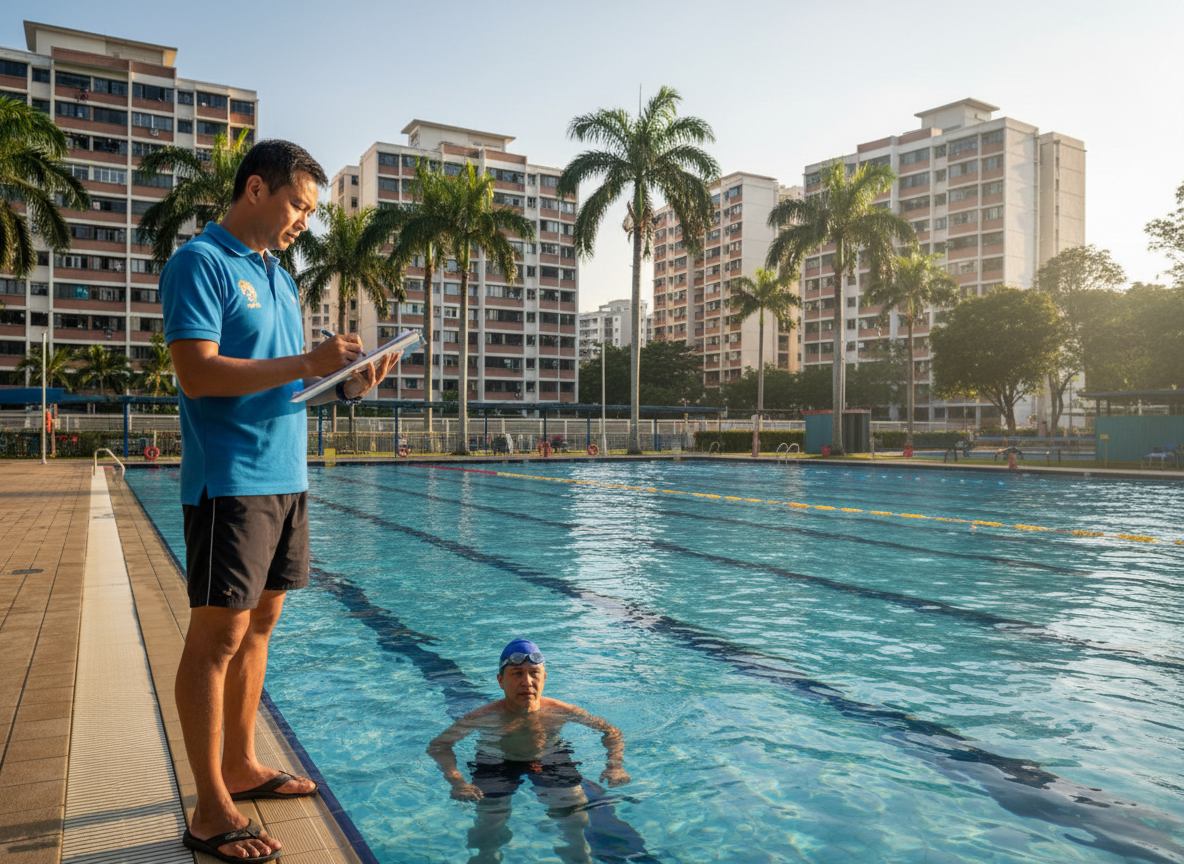
A first lesson is an assessment in disguise. A good coach uses the session to understand where you are, not to push you as far as possible. For children, that means watching how they respond to water, whether they hold breath voluntarily, and how they follow instructions. For adults, it means checking existing habits before layering on new ones.
You will not be left to sink. You will not be tested without explanation. Most first lessons with a qualified coach do not involve your head going under unless you want it to.
What to Bring
| Item | Notes | Needed? |
|---|---|---|
| Swimwear | Fitted and secure — board shorts flap; bikini tops shift. Competitive swimsuits are not required. | Essential |
| Goggles | A basic seal-tested pair from any sports store. Expensive ones do not swim for you. | Highly recommended |
| Swim cap | Required at most public pools in Singapore; optional at condo pools. | Check your pool |
| Towel and change of clothes | Bring a bag that handles wet items. | Essential |
| Water bottle | You sweat in the pool without noticing. Drink before and after. | Recommended |
| Sunscreen | For outdoor pools. Apply 20 minutes before entering water. | Outdoor only |
Leave valuables at home. Most pool facilities have lockers, but bringing less makes the whole session easier.
What Actually Happens in the Session
- Brief introduction and goal check. A good coach asks what you want to get out of lessons before anything else. Take thirty seconds to answer honestly — “I want to survive a 50m length” is a better answer than “improve my stroke” because it tells the coach what to aim for.
- Water entry and comfort check. Stepping in at the shallow end. Coaches watch how you move in water, whether you tense up, and how you respond to your face near the surface.
- Body position and floating. Almost every first lesson for non-swimmers involves floating on the back or front. The body’s response to being supported by water without fighting it is the foundation of everything else.
- Basic kick or arm movement. Depending on comfort and time, the coach may introduce a supported kick or arm pull. This is exploratory, not assessed.
- Debrief and next steps. A qualified coach ends with specific feedback and a realistic sense of how many lessons to expect before a particular goal. Vague “you did great” is not feedback — you can ask for specifics.
What Coaches Look For
In the first session, experienced coaches are not watching your stroke. They are watching three things: how you breathe (mouth closed, tense, or naturally open?), how you hold your head (rigid or relaxed?), and how you respond to unexpected water contact on the face. These tell a coach more about likely progress than any amount of kicking.
Adults who learned to swim badly in childhood often have deeply ingrained breath-holding habits. Children who have always avoided water often have a startle reflex that needs gentle desensitisation before any stroke makes sense. A first-session diagnosis of where you actually are saves months of working around the wrong problem.
Common First-Lesson Concerns
- “I’m embarrassed to be a non-swimmer at my age.” Every coach has worked with adults of all ages learning to swim. A 40-year-old who has avoided water for thirty years is not unusual — they are common.
- “What if I panic in the water?” Tell your coach before the session. Any qualified instructor adjusts for anxiety, and a first lesson at a comfortable pace is never wasted time.
- “My child is terrified.” Tell the coach immediately. Rushing a fearful child toward water produces a fearful adult. The first session may simply be getting comfortable poolside, and that is legitimate progress.
- “I don’t want my face in the water.” Valid. Plenty of beginners swim with face out of the water as a temporary stage. Be upfront about it — coaches adapt.
Safety Before You Start
Tell your coach if you or your child has any medical conditions relevant to water — heart or blood pressure conditions, asthma, epilepsy, or ear problems. This is not paperwork; it directly affects what a coach introduces and how. Children must stay within arm’s reach of a supervising adult whenever they are in or near water, regardless of swim ability. Lessons do not change this.
No lesson should ever include breath-holding games, underwater competitions, or prolonged submersion. Shallow-water blackout — unconsciousness with no warning — is a real and documented risk from repeated breath-holding, even in shallow water. A responsible coach never introduces this. Swim where a lifeguard is on duty; public pools are listed on ActiveSG.
Making the Most of the First Lesson
Arrive five minutes early, not one minute before. Use the extra time to let your child see other children in the pool and ask the coach one or two questions before getting in. Anxiety generally peaks in the waiting, not the doing.
After the lesson, note two specific things the coach mentioned. Not “I need to relax” — that is not specific. “My head comes up when I breathe” is specific. Write it down. These small notes build the practice habit that makes weekly lessons produce weekly progress.
Finding a Coach in Singapore
SwimmingCoach.sg connects parents and adults with certified coaches for private lessons across Singapore — at condo pools, ActiveSG facilities, and club pools. For group classes, Swimming Classes SG lists structured programmes for children and adults. The wider network includes Singapore Swimming Lessons, Swimming Near Me, private swimming lessons, condo pool lessons, Swim Schools International, swimming instructor courses, and inclusive coaching at Special Needs SG.
Frequently Asked Questions
How long is a typical first swimming lesson?
Private lessons are usually 45 to 60 minutes. Group lessons run 30 to 45 minutes depending on age and format. The first session often feels shorter because there is more talking than in later ones.
What if my child cries during the first lesson?
Some do. A calm, experienced coach knows the difference between distress and protest. Stay visible rather than leaving the pool deck, and follow the coach’s guidance on whether to stay nearby or give more space.
Should I eat before a swimming lesson?
A light meal two hours before is fine. Exercising on a full stomach is uncomfortable; going in hungry causes its own problems. Avoid anything heavy in the hour before.
How many lessons before I can swim?
Adults who are comfortable in water often manage a 25-metre freestyle within eight to twelve lessons. Children vary far more — six to thirty lessons is the realistic range depending on age, comfort level, and lesson frequency.
Can I watch my child’s lesson?
Usually yes. Ask the coach about their preference — some find parental presence from poolside helpful for young children; others find it increases separation anxiety for certain age groups.
What makes a swimming coach qualified in Singapore?
Look for coaches certified under SwimSafer, the Singapore Swimming Association, or equivalent national frameworks. Ask directly what certification they hold and when it was last renewed. A reluctance to answer is itself an answer.


Leave a Comment