

By Alvin · SSI Swim Teacher Instructor, AustSwim Assessor, Autism Swim Teacher · More than 10 years coaching · Last updated: 21 October 2026
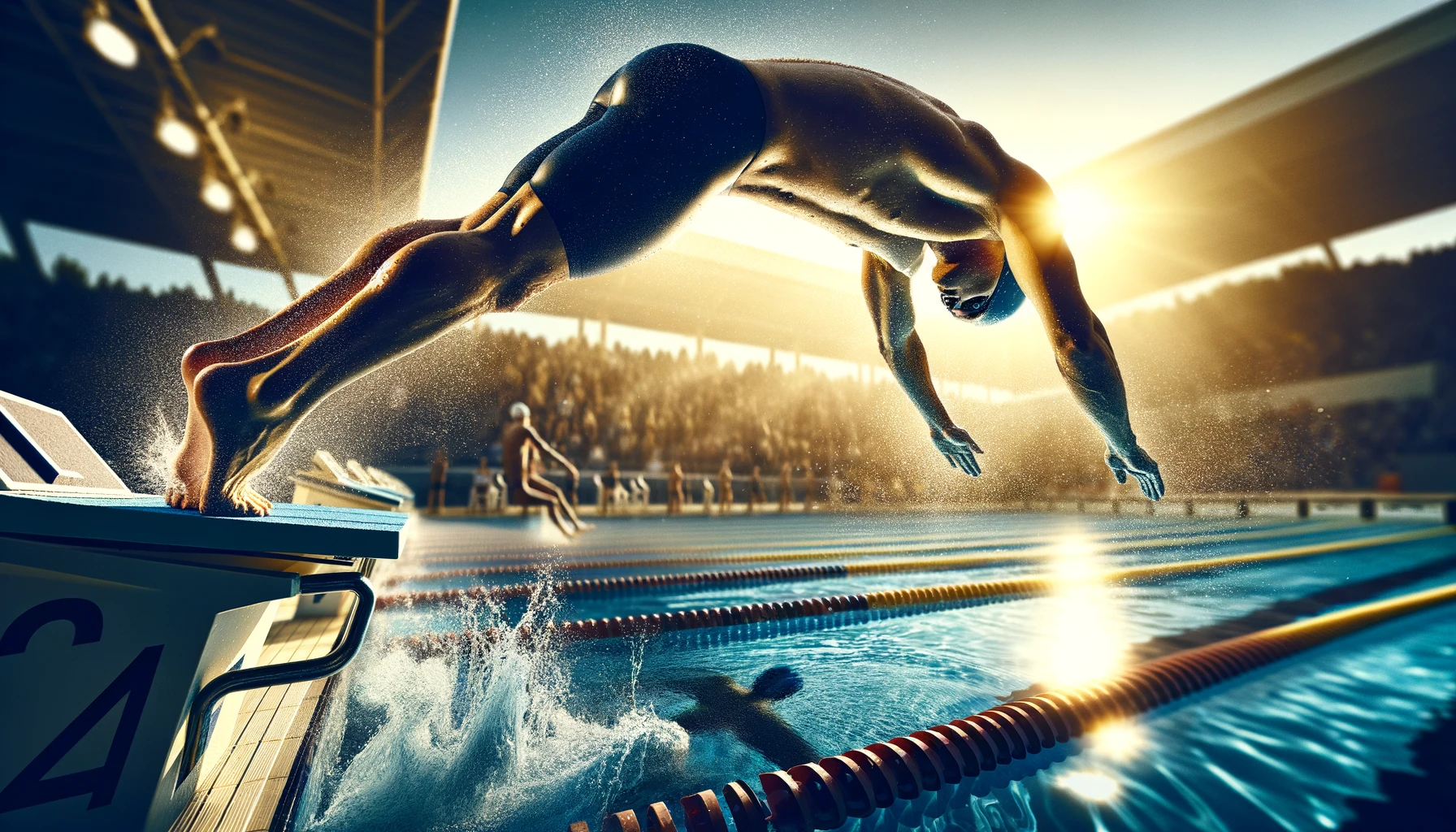
The Youth Olympic Games 2024 in Gangwon, South Korea, put junior swimmers aged 14 to 18 from across the world in direct competition. What separated the medalists from the heat swimmers came down to a handful of observable things: clean water entry, honest breathing patterns, disciplined turns, and composure in the final twenty-five metres. None of that is elite magic. All of it is teachable, at any age, in any pool.
Watching elite youth competition is useful for coaches, but only if you extract the right lessons. The swimmers in those heats have often trained for six to eight years by the time they reach the Games. What they do in the race is a visible output of what happens in practice, year after year. Here is what is worth watching for, and what actually transfers to club and recreational coaching in Singapore.
What Youth Olympic Swimmers Do Well — And Why It Matters to a Local Coach
1. Body position in the water
The most consistent marker of youth Olympic-level swimmers is horizontal alignment. Hips at the surface, head neutral, kick originating from the hip rather than the knee. You see this within the first few strokes off the start. In recreational and club swimmers, the first failure point is almost always a sinking hip position — the head rises, the hips drop, and drag multiplies immediately.
Drilling a flat body line is the single most transferable lesson from watching elite junior competition, and it costs nothing to teach in any pool.
2. Breathing pattern discipline
Elite juniors breathe bilaterally in freestyle, breathe on the stroke cycle rather than early, and keep the leading arm extended during the breath. In an under-14 or under-16 training group, the most common error is the opposite: the head lifts rather than rotates, the lead arm collapses, and the swimmer compensates by breathing every stroke.
Video analysis of youth Olympic freestyle gives coaches a concrete reference to show young swimmers what good looks like.
3. Turn efficiency
Tumble turns in elite junior swimming are tight, fast, and consistent. Most junior club swimmers in Singapore either do open turns or execute tumble turns slowly. Given that a typical training pool is 25 metres, a swimmer completes between six and twelve turns in a single hundred-metre set. Efficient turns on every repetition compound dramatically over a session.
4. Composure in the final phase
Elite junior swimmers rarely sprint and fade. They distribute effort, hold form under fatigue, and accelerate into the finish rather than decelerating through it. This is pace discipline, built over years of structured interval training. The lesson for club coaches is that young swimmers need to practise managing effort, not just producing it.

From Observation to Practice: A Five-Step Coaching Framework
- Watch with a specific technical question. Before showing video to a swimmer, pick one thing you want them to notice. Open-ended watching produces vague observations. “Watch where their hips are at the 10-metre mark” produces usable data.
- Connect the observation to something the swimmer already does. Comparison is motivating when it is concrete and non-threatening. “Look at how early they start that rotation — you already do that on your better lengths” works better than “you need to look like that.”
- Break the skill into one drillable component. Full-stroke mimicry rarely transfers. Single-skill isolation does: a catch-up drill for the leading arm, a head-position check at every wall, a kick-count per length.
- Apply it in practice immediately, not next session. The window between seeing and doing is short. Build ten minutes of related drill work into the same session.
- Return to video after a training block. Progress over four to six weeks is visible on film. Showing a swimmer their own improvement is more powerful than any medal comparison.
Youth Olympic Games 2024: Stroke-by-Stroke Coaching Notes
| Stroke | What elite juniors do | Common club-level gap | Drill priority |
|---|---|---|---|
| Freestyle | High elbow catch, bilateral breathing, hip rotation drives the stroke | Arm crossover, head-lifting breath, flat body | Catch-up drill, side-kick drill |
| Backstroke | Neutral head, pinky-first entry, hip-driven rotation | Head forward, thumb-first entry, flat rotation | One-arm backstroke, count-stroke drill |
| Breaststroke | Tight streamline off every wall, narrow kick, short recovery | Wide knee drop, slow recovery, head-bobbing | Wall streamline pause, kick-on-back drill |
| Butterfly | Short powerful kick, continuous undulation, fast entry after breath | Wide arm entry, vertical kick, broken rhythm under fatigue | One-arm butterfly, kick-on-board sets |
What Youth Olympic Competition Does Not Tell You
Elite competition shows the output. It does not show the daily work: the corrective feedback, the missed sessions made up, the coaches who kept sessions technically demanding rather than just physically hard.
What it also does not show: the many swimmers who trained just as consistently but did not make finals. Selection for an Olympic programme is partly ability and partly circumstance — squad access, funding, travel, parental support, time. A club swimmer in Singapore who trains three times a week, can swim two hundred metres of controlled freestyle and has honest turns, has laid the technical foundation that elite junior careers require. Whether they pursue that further depends on more than what happens in the pool.
Common Coaching Mistakes When Using Elite Video
- Showing whole-race footage without a focus. Young swimmers watch the splashing, not the mechanics.
- Comparing a nine-year-old to a seventeen-year-old. Developmental differences make this demoralising rather than motivating.
- Using elite competition as a benchmark for immediate performance. Youth Olympic swimmers are outliers at their age. They are useful as reference, not standard.
- Focusing only on speed. Body position, breathing pattern and turn efficiency are teachable. Raw speed at 15 is a poor predictor of adult performance.
- Never using it at all. Video is a concrete, motivating tool. Coaches who refuse to show young swimmers what good looks like miss an easy engagement opportunity.

Safety in Youth Training
Youth swimmers training seriously need adult supervision at all pool sessions. Never allow breath-holding drills, hypoxic sets, or underwater distance work without direct professional oversight. Repeated breath-holding, particularly after heavy exertion, creates shallow-water blackout risk — a silent loss of consciousness that has killed fit swimmers in supervised pools. Any coach who still programmes hypoxic sets as routine training should review current guidance from Sport Singapore.
Shoulder pain in training-age juniors is almost always an overuse signal, not a sign of inadequate effort. Reduce volume, check stroke mechanics, and refer to a physiotherapist. The same applies to knee pain in breaststroke specialists.
Frequently Asked Questions
Does Youth Olympic Games 2024 coverage include swimming events?
Yes. Swimming at the Youth Olympic Games features standard Olympic strokes and a range of sprint and middle-distance events for athletes aged 14 to 18. Results and coverage are held by the IOC and national Olympic committees.
Should my child aspire to compete at youth Olympic level?
Aspiration is fine; expectation is different. Youth Olympic pathways require consistent, long-term commitment and squad-level training from an early age. A more productive framing is building the skills that make any competitive pathway possible: clean technique, reliable attendance, and genuine enjoyment of the process.
What is the right age to start competitive swimming?
Children can begin structured swimming lessons early and join squads when they can swim reliably across two strokes. There is no universal age — physical readiness and genuine enthusiasm matter more than meeting a calendar date.
How do Singapore swimmers qualify for events like the Youth Olympic Games?
Through the national swimming pathway managed by Swimming Singapore, which involves state-level and national competitions. Qualification systems and age categories are set by the IOC and World Aquatics. The route begins in club squads and national development programmes.
Can a swim coach help a child who wants to compete seriously?
Yes. Good coaching from early in a swimmer’s development makes a measurable difference. Technique errors embed quickly; a coach who catches them early saves years of re-learning later. Swimmers serious about competition benefit from private swimming coaching sessions alongside squad training to address individual technique gaps.
Is it harmful to show young swimmers videos of elite competition?
Not if it is done with a specific technical focus and without pressure to match what they see. Used well, it is one of the most engaging coaching tools available.
The Coaching Summary
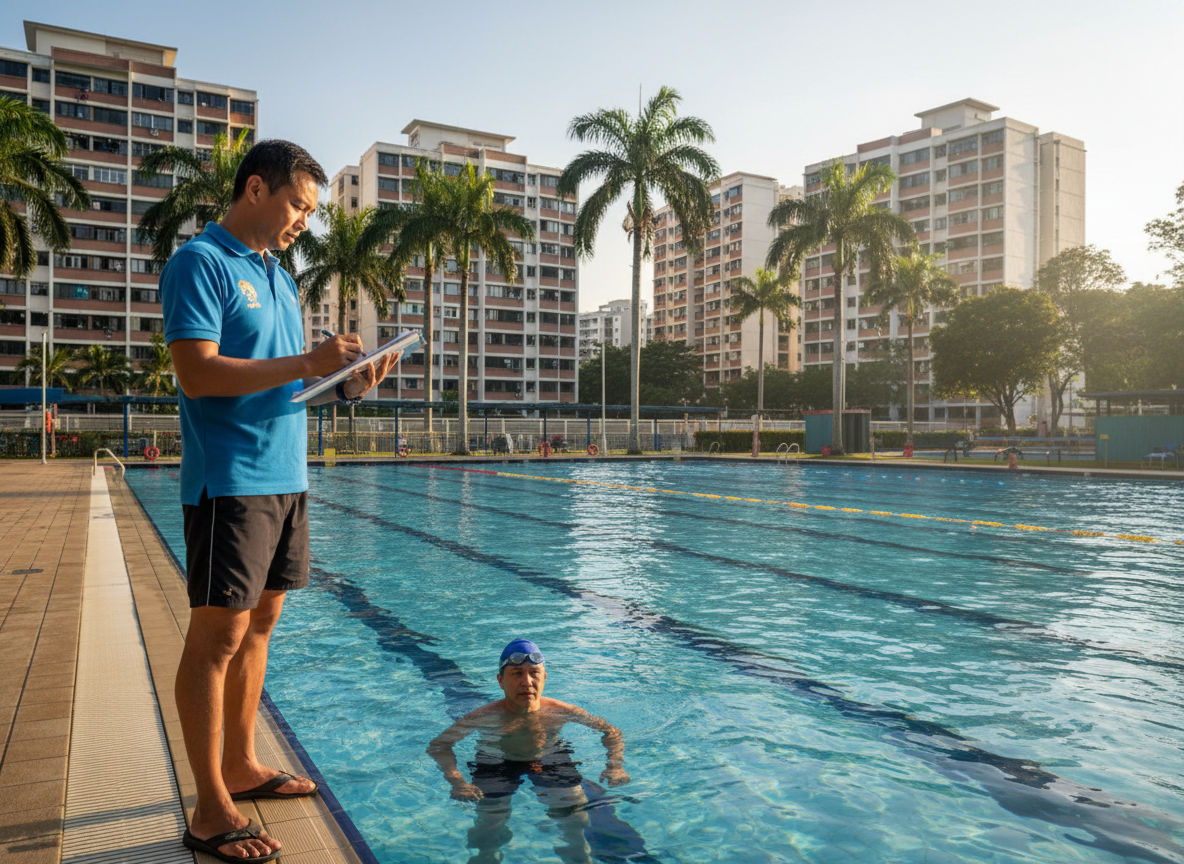
The Youth Olympic Games 2024 reminded coaches that elite junior swimming is built on a small number of fundamental skills done well and consistently: flat body position, disciplined breathing, efficient turns, and paced effort. None of these are age-gated. They can be taught in a condo pool, a club session, or a public pool near you, with a patient and technically informed instructor. The competition shows what the accumulated work produces.
For swimmers with additional needs who want to experience the same kind of structured competitive pathway, adaptive swimming programmes offer an equivalent framework. For instructor certification that prepares coaches to deliver these technical standards, see swimming instructor courses in Singapore.

Leave a Comment